
“You Don’t Have to Like It”: Putting Your Audience First Isn’t Always Easy
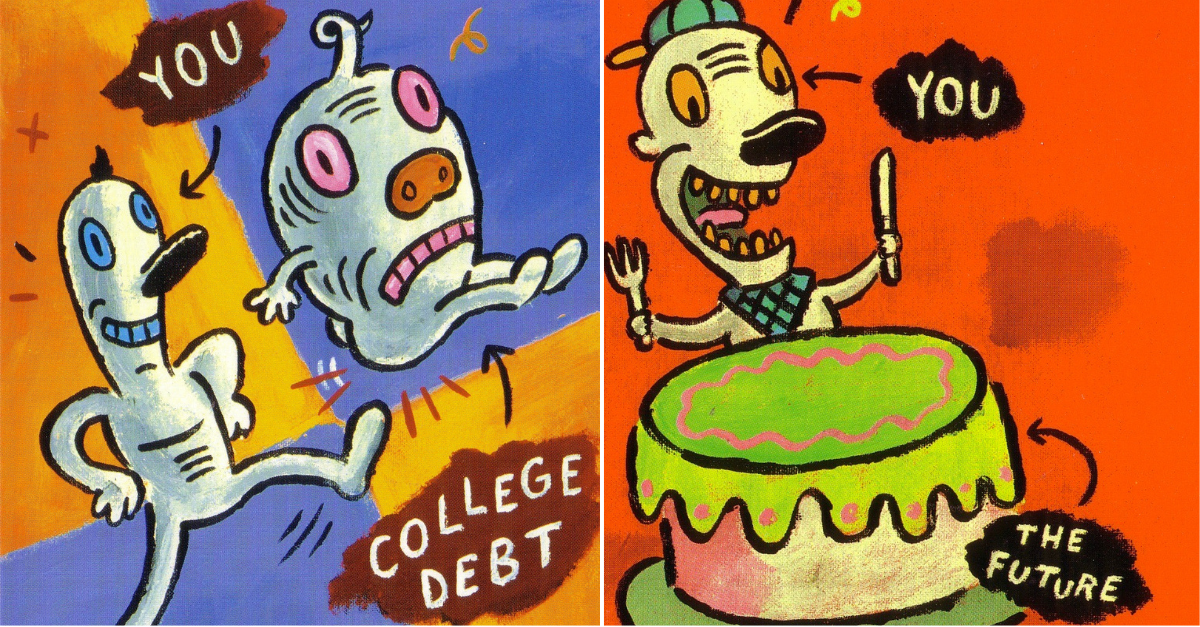
Not everyone liked the awareness campaign we produced for AmeriCorps. That was the point.
Every time I test messaging or creative concepts through focus groups, I’m surprised by what I learn. No matter how attached you may be to an idea, what matters is what the intended audience thinks — not what your boss, board members, or colleagues prefer.
That reality became particularly vivid when our team helped shape the first national awareness campaign for AmeriCorps, the service program launched by President Clinton in 1994. I was part of the internal communications team working to build visibility among young people.
A national telephone survey revealed that about one-third of Americans had heard of AmeriCorps — but that number dropped to 16 percent among 18- to 24-year-olds, our primary recruitment audience. Focus groups with college students made it clear that our campaign would be unlikely to “recruit” anyone directly. Instead, we needed a campaign to build visibility on college campuses — in order to support recruiting efforts led by other staff and regional offices.
The goal was to make an impression so students would be more likely to visit a website, talk to an on-campus recruiter, or consider participating in the future.
This was the MTV Generation. We weren’t competing for attention with other federal agencies or volunteer programs. We were competing with music videos, major consumer brands, and everything else on campus.
Through a competitive RFP process, we identified an up-and-coming advertising agency, TKO Advertising in Austin, Texas. They were creative, hungry, and inexperienced with federal clients — which turned out to be a huge advantage. Their ideas weren’t shaped by the usual expectations of “government work.”
Faced with the challenge to break through the clutter on college campuses, TKO recommended that we hire a cartoonist whose work was starting to appear in Rolling Stone and other magazines. His name was Gary Baseman, and his style was quirky, surreal, and unmistakably different from anything you’d expect from a federal agency.
To put it mildly, this was not the style the government officials overseeing recruitment had anticipated, and it took real effort to get approval.
Without being disrespectful, we had to explain: “You don’t have to like it — because you’re not the target audience.”
We described the focus group results and the findings of our review of competing promotion on college campuses. And they reluctantly agreed to move forward.
That was the first obstacle.
The concept we developed with TKO pitted the college student against an obstacle — starting with “You vs. College Debt” (because we knew the program’s modest stipend was an important incentive). Some staff thought that message wasn’t idealistic enough, so the next ad became “You vs. Apathy.”
And then, in response to a concern that the ads were too “confrontational,” we created a third version showing “You” diving into “The Future.” Here’s what the ads looked like:
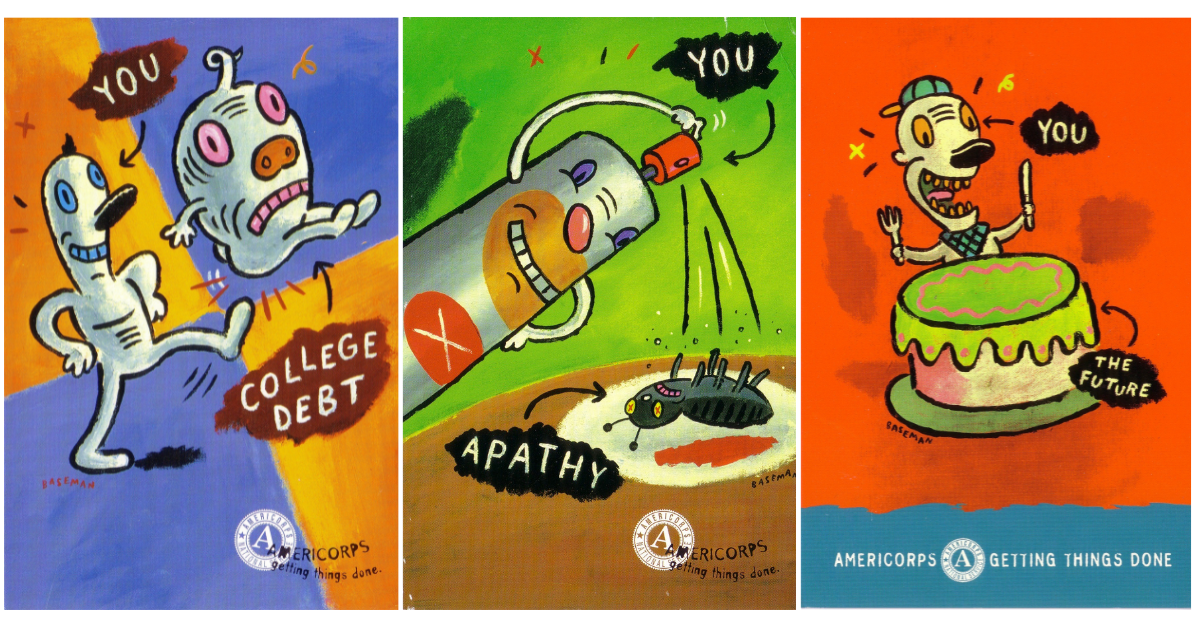
To counter some of the internal skepticism, we shared the mockups with staff in a few of our regional offices, since the posters were meant to support their recruiting efforts. Generally, people who were younger and who understood communications and advertising were very enthusiastic.
Other reactions were…mixed. Among the feedback we heard:
The college debt ad was violent, because one figure was kicking the other.
The apathy ad was not environmentally friendly and undermined animal rights.
The cake ad encouraged poor nutrition.
We stayed focused on the audience and moved forward, distributing posters and postcards on college campuses and at events like Lollapalooza. As far as I can tell, we were also the first federal agency to produce a temporary tattoo — and that was a big hit.
On-campus recruiters reported positive reactions, and the campaign significantly increased awareness of AmeriCorps. As Raul Garza of TKO reminded me, input from our audiences guided not only the tone of the campaign, but also decisions about placement. And we didn’t just rely on traditional metrics — we also included qualitative measurements like “sentiment, affinity, and even coolness.”
The AmeriCorps campaign worked not because everyone inside the organization liked it, but because we stayed focused on the audience we were trying to reach.
That tension never really goes away. In most organizations, communication decisions are influenced by preferences, instincts, and internal debate.
But the work gets better when you’re willing to say what we said then: “You don’t have to like it.”
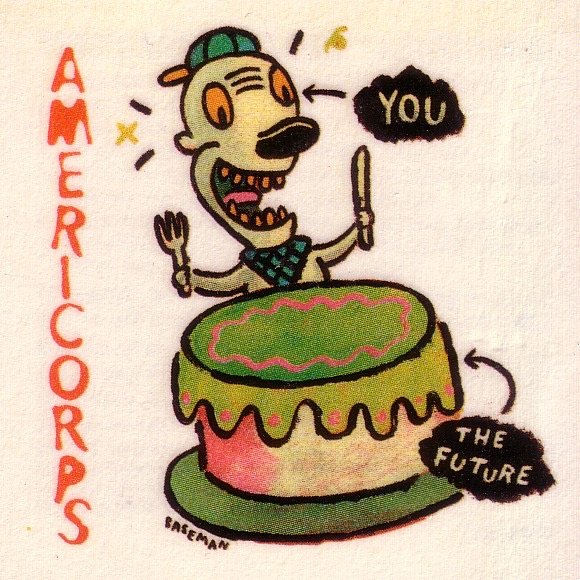
The campaign materials included what was likely the first temporary tattoo ever created by a federal government agency.